4. The Neuroscience of “I AM WORTHLESS”

It’s not simply my opinion that SELF judgment is detrimental to the SELF. The deleterious impact of SELF criticism on both our minds and bodies can now be scientifically verified.

Discoveries made through neuroscience demonstrate that the way we perceive an external threat such as a dangerous predator is the same way we register an internal threat such as a SELF critical thought. 

This means that as far as the brain and body are concerned, there’s not much difference between the SELF critical thought, “I AM WORTHLESS,” and an actual live grizzly bear.

Allow me to explain…

You’re walking through the woods when you stumble upon a mama grizzly and her two adorable cubs. Without even thinking, your eyes send a signal to your nervous system, which sets off a cascade of physiological reactions otherwise known as the “fight or flight” response. 

Your heart pumps faster, the airways in your lungs open wider, sweat pools in the palms of your hands, stored glucose in your cells floods into your blood stream. All of these changes happen in a matter of seconds and are designed to help you fight or flee the external threat, the grizzly.

You choose wisely and opt for the latter—flight—and take off running. Mama bear calculates that you’re not worth abandoning her cubs for and you get away. You survive.

This is the way we humans (and other mammals) have survived for millions of years. Through the hard-wiring of an ancient, ingeniously choreographed survival system that’s both efficient and effective. Unfortunately, however, it’s also costly.


Defending your SELF against any external threat takes both a physical and emotional toll on the body and mind, on your outside SELF and inside SELF. 

Energy reserves become depleted and stress hormones in the brain get released into the body. Such hormones are essential for accomplishing the short-term goal of surviving a chance encounter with a grizzly, but are toxic when delivered in large doses for long periods of time.

This is one reason why people who live in poor and dangerous places have a shorter lifespan than people who live in rich and safe places. Those who persistently live with less, under constant threat, exist in a perpetual state of hyper arousal, trapped in a never-ending mode of fight or flight. The end result is higher rates of both physical and mental illness.

Our survival system works well when we can return to a peaceful and plentiful place after the threat subsides, but when we’re unable to escape the danger, it can be lethal.

But what about the internal threat, the SELF critical thought? Why and how is “I AM WORTHLESS” anything like the peril posed by a ferocious, wild animal?

To answer these questions, you have to understand the crucial role that social connection plays in the survival of the human species. Human beings are deeply social creatures. In addition to oxygen, food and water, we need love and connection to survive. We need a clan—a family, and we need a tribe—a community.

When we’re unable to develop or maintain supportive relationships, particularly in early childhood, we fail to thrive. We die.

And so, just as our survival system is constructed to fend off physical threat, it’s similarly structured to ward off social danger. Being shunned, cast out, disowned or rejected is just as relevant to the human brain and body as the grizzly because it risks our social survival.

This is where “I AM WORTHLESS” comes in. While such a thought may seem impotent (after all, it’s just a thought) it actually serves to catapult us into action. With a chorus of “I AM WORTHLESS” playing in the background, we get to work making our SELVES as socially acceptable as possible, striving to become everything that those around us hold dear. Productive, beautiful, successful, powerful.

At first, it seems “I AM WORTHLESS” is helping us. For example, such negative SELF assessment may drive our productivity. And when productivity is both valued by our family and protective in our community, it not only gives us our worth, but also ensures our safety. We’re all good, we’re all golden, as long as we’re productive.

However, I AM WORTHLESS can only help us for so long because we can only be productive for so long. We get sick, we get tired, we break down, we need rest. Here is where the threat comes in. When our SELF worth and SELF preservation are tied to our productivity and then we can’t, for some reason, be productive, it’s as terrifying to the brain and body as the grizzly. 

Stress in the form of shame courses through the SELF, setting off the same physiological response we have when we feel threatened physically, not to mention producing intensely painful emotional symptoms: Panic, anxiety, depression.

When shame is experienced mildly and intermittently, we weather the SELF attack okay. For example, if we think “I AM WORTHLESS,” but part of us knows that we are, in fact, not worthless, that we have value outside of our productivity, we’re able to tolerate the shame. 

But if the shame is experienced frequently and intensely because we believe “I AM WORTHLESS” at our core, then it’s exactly like living in the poor and dangerous place that you can’t escape. It’s exactly like being trapped in perpetual fight or flight mode. Only this time, the threat is coming from the inside, not the outside. This time the threat is coming from the SELF.

At the start of the pandemic I had been trapped in perpetual fight or flight mode for quite sometime. My mind was a poor and dangerous place that I couldn’t escape. I believed “I AM WORTHLESS” at my core and it rang through my inside SELF like a never-ending refrain.

I had heard “I AM WORTHLESS” so frequently that, eventually, I learned to tune it out. But not before it had settled into my cells and burrowed into my bones. Not before it had become my default setting, my background noise, my mama grizzly that I couldn’t outrun.

Until, one day, I did.
3. The Elephant in the Room

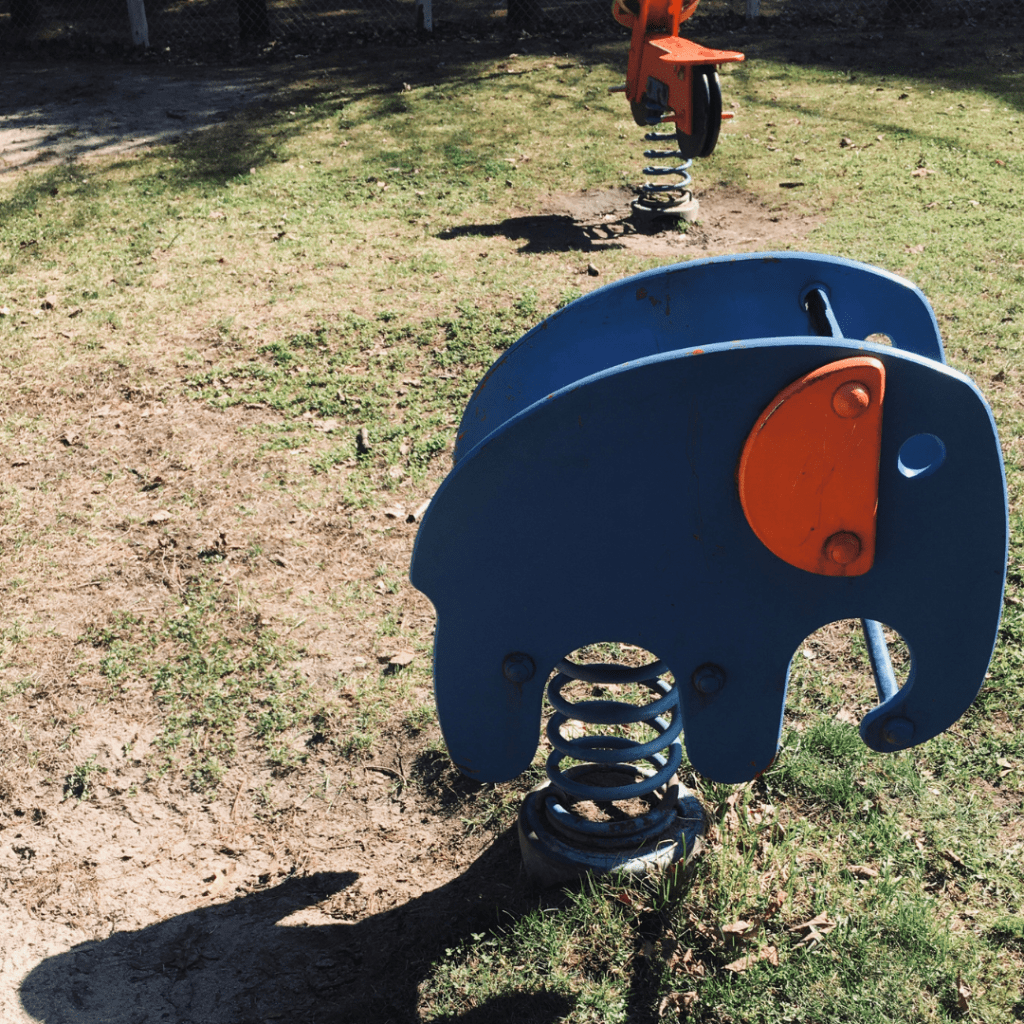
Perhaps we shouldn’t go any further without addressing the elephant in the room, or in this case, the SELF on the page.

You’ve probably noticed by now that when I refer to the SELF I use capital letters. I made the decision to capitalize the SELF, and also detach it from any sort of possessive pronoun, such as my or your (as in my SELF or your SELF), deliberately.

Initially, I wrestled with this decision, going back and forth between all caps and lowercase, worrying that if I referred to the SELF in this way, it might look odd or stand out. But then I checked in with my SELF (something I’ve only recently learned how to do) and realized that looking odd and standing out is exactly the way I want the SELF to appear.

I want the SELF to look big. I want the SELF to have room. Otherwise, I fear, the SELF will get lost. Anytime anything is omnipresent, it risks being forgotten, neglected or taken for granted. Like water is to fish, the SELF is to us. After awhile IT just…disappears.

And yet, we all have a SELF. None of us are SELF less. 

Even the most SELF less among us, Gandhi, Mother Teresa, Jesus all had SELVES that they inhabited while they walked upon the earth. 

You, me, we all have a SELF, but how often do we acknowledge IT? How often do we attend to IT? How often do we ask IT what IT needs? How often do we listen?

If you’re anything like I used to be the answer to this question is “Not very often.”

Most of the time, the SELF is the proverbial elephant in the room, that obvious thing that we all know is there, but pretend doesn’t exist out of fear that IT might slow us down, that IT might get in the way, that IT might, (God forbid), have a need.

Instead of recognizing the SELF and what IT needs, we push the SELF down, we shush the SELF, we bark at the SELF, “Your need doesn’t matter. Needs are for the weak. GO, GO, GO!”

When we do focus on the SELF, it’s usually on the outside SELF, on our faces and bodies. We primp and pluck, shape and starve thinking that if we can just make the outside SELF shiny enough, tiny enough, fit enough, then we will be safe, then we will be happy.

The problem with this approach though is that the inner dialogue that accompanies the eternal search for external beauty is rarely kind. In fact, it’s usually quite mean. 

For as long as we’re focused on perfecting the outside SELF, we’re usually rejecting the inside SELF. For as long as we’re striving to make the outside SELF more beautiful, more acceptable, more anything, the inside SELF suffers.

Here’s what the inside SELF suffers from: SELF judgment.

Every time we SELF criticize, SELF chastise, SELF deprecate, the inside SELF gets smaller, goes deeper, hiding like a terrified child until, one day, the inside SELF just stops coming out. One day the inside SELF just shuts down entirely.

By the time Covid hit in March of 2020, my inside SELF had been long gone, buried years ago by relentless SELF cruelty. My outside SELF was there, fairly shiny, tiny and fit, but never shiny, tiny or fit enough. 

Without my inside SELF, I had no clue what I felt and no idea what I needed. All I knew was that my outside SELF, alone, wasn’t going to be enough anymore.

If I was going to make it through a global pandemic (without bringing my whole family down with me), I was going to need my inside SELF too, which meant that I was going to have to start making amends.

If I wanted my inside SELF to come up and out of hiding, I was going to have to start being kind to IT.

ELEPHANT IN THE ROOM

2. Into the Unknown

When you finally decide to radically alter the way you’ve been relating to your SELF, it’s scary. So scary, in fact, that most people don’t do it, unless they’ve decided that there’s no other way.

The misery of your day-to-day relationship to your SELF has to outweigh the terror of the unknown. No one chooses the unknown when the known is working just fine. The known has to be bad. Really bad.

By the time I arrived at the doorsteps of our family cottage in the winter of 2020, my known had become that bad.

My mind, the arena in which I had come to relate to my SELF, had become a vicious place. A hostile, war-torn scrap of land, sitting on the border between two opposing nations. A sterile atmosphere in which nothing green nor good had grown for years due to nonstop violence.

I had gotten used to living under piles of debris of my own making. Layers upon layers of rubble and dust. (It’s amazing what one can adapt to when SELF-destruction happens incrementally). After decades of turning against my SELF, my inner landscape had become, virtually, inhabitable.

Perhaps the saddest part is that later, several months after I decided to take the other path on the grassy knoll (see Blog 1), I discovered that the war I had been waging inside myself for all those years hadn’t even been a just war. The conflict hadn’t been between right and wrong or good verses evil. It had been between right and right, good verses good. In fact, there hadn’t even been two opposing sides. Just one side, (the side of truth), turning against itself. 

But more about that later…

For now I think it’s more important to convey just how desolate my insides were, just how desperate I was, just how scary it was, at that moment in my life, to contemplate starting a whole new way of relating to my SELF. 

Because when you understand this, you can begin to appreciate what a freaking miracle it was that I was able to claw my way up. That I was able to stagger out, with dust in my lungs and bricks in my eyes, and take a step towards the light, rather than remain in the dark, under the pile.

Here’s where I think divine intervention may play a role.

Because when you decide to change in this way, when you decide to do an about-face, take the less travelled path or step into the unknown, it cannot happen through willpower alone. There has to be another force present. Some surrounding element that allows you to picture something better for your SELF, even though you haven’t yet discovered your own SELF worth. There has to be another voice, (that’s not your own), patiently whispering to you to lay down your weapons and stop the war.

How else do you explain the fact that a tiny seed, when planted on scorched earth, amidst cannon fire, can still take root and grow?

1. Two Paths

It was March of 2020. The brink of the global pandemic. The whole world had just come to a screeching halt. Everything was about to change. At the time, I didn’t know exactly how things were going to be different, I just knew they were going to be a lot harder.

I also knew that I wasn’t prepared. I’m not talking about material preparation. In that way, we had our bases covered. I’m talking about emotional preparation, spiritual preparation, SELF preparation. In all those ways, I was totally and completely fucked.

I had been neglecting my SELF, (if not going to all out war), for quite some time, and had arrived at point in which I had no mental fortitude, no stamina, no resiliency and no reserves, even though I was in decent physical shape.

My inner world, the place in which we all really live our lives, was in complete disarray. And I knew that this new life, this pandemic life, was going to require a lot more from me than I had been expecting from my SELF.

I was going to need to change, and not just a little. I was going to need to radically alter the way I had been relating to my SELF. And, I was going to need to do it quickly.

And so, just like that, I decided to change.

(Well, not “just like that.” Radical change of any kind never happens “just like that.” But my decision to change felt like it happened “just like that.”)

I know the exact moment in which I made the decision.

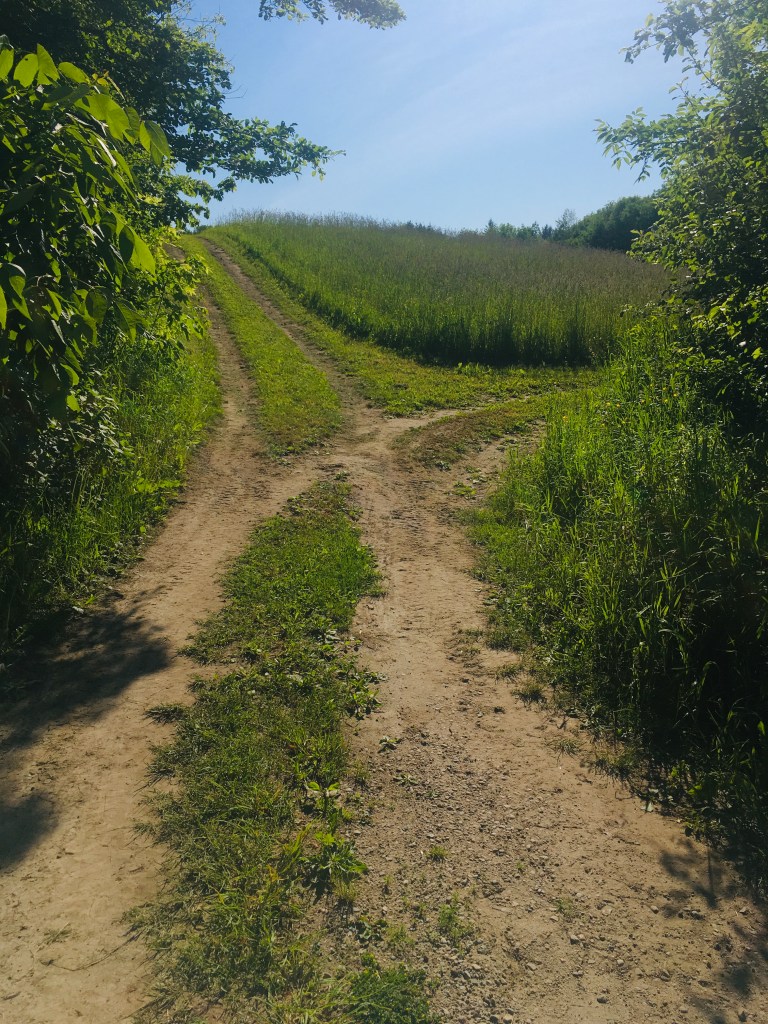
We had just pulled up to our family cottage and were about to begin a whole new way of co-existing as a family when a fork in the road presented itself to me. More specifically, two dirt paths etched into a grassy knoll appeared before me like a vision in the sky.

I thought to my SELF: There are two different paths here. I can keep going down the same path I’ve been on for the last couple of decades and continue barrelling towards SELF destruction, (bringing my whole family down with me), or I can choose the other path.

At the time, I didn’t know what the other path had in store for me, I just knew it had to be preferable to the one I was on. But, most of all, I knew it had to be better for my family.

And so, on the day we brought all our stuff up from our home in Toronto to settle into a quieter, calmer, less populated existence on Georgian Bay, I decided I would bring my SELF (I had no other choice) but I wouldn’t bring our old relationship with me.

I would forge a new, kinder, more compassionate relationship to my SELF, and I would do so in the midst of a global pandemic.

TWO PATHS